How to Tile Print PDF for Large-Scale Projects
I still remember trying to print a massive architectural map on my basic home printer. The print job failed completely. I got stuck with tiny, unreadable lines because I tried to cram the whole design onto one standard sheet. All the sharp details just disappeared, leaving me with a blurry, useless smudge.
It was impossible to read any of the measurements or labels. That’s how I got to know that learning how to tile print a PDF is very handy. This technique is the most practical way to handle oversized documents when you do not have access to a commercial-grade plotter.
You should stick around to see how this works; it will save you a lot of tape, ink, and unnecessary frustration. I have found that using UPDF makes this whole process much smoother than the clunky alternatives I have used in the past.
How PDFs Are Printed Across Multiple Sheets
Essentially, tile printing or “Poster Mode” is a way to tell your software to chop one large digital page into several smaller sections. When you handle a massive 24×36 (inches) document, your software automatically maps the layout across multiple standard 8.5×11 sheets. It calculates the necessary grid, ensuring every inch of the original design is captured.
By adding a small “overlap” margin on each page, the program makes it much easier to align the sheets perfectly once they are printed, allowing you to tape them together into a full-scale physical map. It then prints them out like pieces of a puzzle.
I saw an Adobe community thread where someone struggled to find Acrobat’s tile printing option and asked for clear guidance about how to tile print in Adobe Acrobat. They had a huge technical drawing and couldn’t get it to spread across several pages for a presentation. This is a total headache for DIYers and pros. Standard printers usually force your entire design onto one sheet of paper.
This leaves you squinting at unreadable lines that are useless for any professional review. Instead of a sharp, full-scale blueprint, you just get a blurry waste of ink and paper that hides all the important technical details.
You need these “tiles” to have a tiny bit of overlap so you can glue or tape the sheets together with high precision. Without this feature, you are stuck looking at a microscopic version of your work or spending a fortune at a local print shop.
Also Read: Set Your Preferred Default Printer in Windows 11
How To Tile Print a PDF?
I switched to UPDF for my projects because it’s lightweight and doesn’t lag when opening massive blueprints. The interface is refreshingly straightforward; I’m not stuck hunting through buried menus just to get a file onto paper.
Having all the essential tools within reach saves a ton of time, especially when I’m in a rush to get a clean, full-scale printout ready for a team review or a workshop. It is also significantly more affordable than the big-name competitors, and the best part is that a single license covers me on my Mac, Windows, and even my mobile devices.
To get started with how to tile print pdf files in UPDF, follow these steps:
- Open your file: Launch UPDF and open the large-scale PDF you want to print.
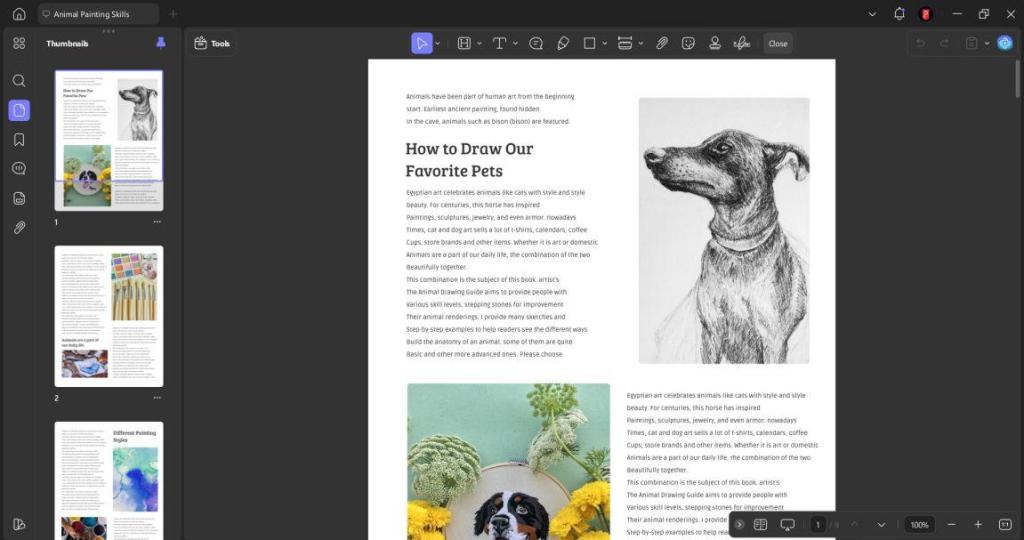
- Access Print: Start by clicking the Print icon in the top-left corner or use the Ctrl+P shortcut. This pulls up the main menu where you’ll manage your layout and paper settings.

- Choose Poster Mode: Look for the “Poster” tab on the right side of the print dialog box. This specific setting is what actually chops your large drawing into a grid of smaller sheets that a standard home printer can handle.

- Adjust Scale and Overlap: Keep the “Tile Scale” at 100% to maintain the original size, or go higher if you want a larger display. I always recommend adding a 0.05-inch “Overlap.” This small margin is a huge help when you’re physically taping the pages together later, as it gives you a clean edge to align the lines perfectly without any visible gaps in the image.

- Check the Preview: Check the preview on the left to see exactly how many sheets the job requires. It takes the guesswork out of the process before you start wasting any ink or paper.

- Print: Hit the Print button and watch your puzzle pieces come to life.
I really enjoy having all these professional features in one single platform. I no longer switch between three apps to edit text and print posters, which saves time and keeps the workflow simple. If you want to make your workflow easier, I suggest you download UPDF or look into their premium licenses.
FAQs
How to Resize a PDF So It Prints Correctly on One Page?
If you have a file that is slightly too large for your paper and want to resize the PDF, open the print menu in UPDF. Under the “Size” tab, select “Fit”. This automatically adjusts the scale so nothing gets cut off at the edges.
Should a PDF Be Flattened Before Sending It to Print?
In my experience, flattening a PDF is essential. It merges layers, comments, and annotations into a single static image. This step is necessary to prevent printing errors caused by complex file structures. It also ensures that the final hard copy perfectly matches your screen display without missing elements or shifted graphics.
How To Split a Large PDF Into Multiple Pages for Printing?
Split large PDFs into separate files using UPDF Organize Pages. Click “Split” to slice your document by page count or file size. This keeps your work organized, making it much easier to handle and print specific sections as individual documents.
This allows you to manage long documents as individual pieces for easier printing. Once configured, hit the split button to generate the new files, ensuring each section is ready for your specific output needs.
Conclusion
Tile printing is a complete lifesaver for anyone working with sewing patterns, banners, or technical charts. It essentially turns your standard home printer into a wide-format machine.
I have found that UPDF is the easiest tool you can use without having professional skills to tile a print PDF. If you have trouble understanding complex methods for tiling a PDF, then give this method a try.
Related: Want a free PDF tool for combining, splitting and organizing pages? See PdfCraft and the other 11 free ArtCraft apps (early alpha, so test on copies).

Axee Davies is the founder of AxeeTech, publishing gaming guides, codes, and Windows how-tos since March 2013. A tech enthusiast for 13+ years — starting with smartphones and Android rooting — he now runs a site that puts out a new guide every day for Roblox players, traders, and Windows users. More about AxeeTech
More How to You May Like
 What Is MiniMax H3? Key Features, Video Editing Capabilities, and Use Cases Explained
 Before vs After: What an AI Video Enhancer Can Actually Fix
 Understanding Prior Authorization Regulations: What Providers Must Know
 How technology is empowering remote teams to work smarter
 Top 3 Free online MBOX to PST Converters
 Common Causes of Sewage Backup That Require Emergency Sewage Cleanup Services
 Windows Resource Protection Could Not Start the Repair Service
 MEMORY_MANAGEMENT Blue Screen in Windows 10 and 11: 8 Fixes