Modular, semi-modular vs. non-modular PC power supplies. Comparison of all types.
What PSU modularity means and why it matters
PSU modularity means that all the cables that come with a PSU can be connected separately, and only those that you need for your PC stable operation. There are no soldered connectors that you cannot disconnect, so it simplifies cable management inside the PC case, keeps a tidy look, and makes replacing components easier without dealing with a tangled mess of cables. From the airflow side, it’s another benefit, as fewer cables mean fewer obstacles for airflow and help hot air move out of the case.
Always remember that modular cables are not universal: you can only use cables that are compatible with a specific PSU model, even if their connector physically fits.
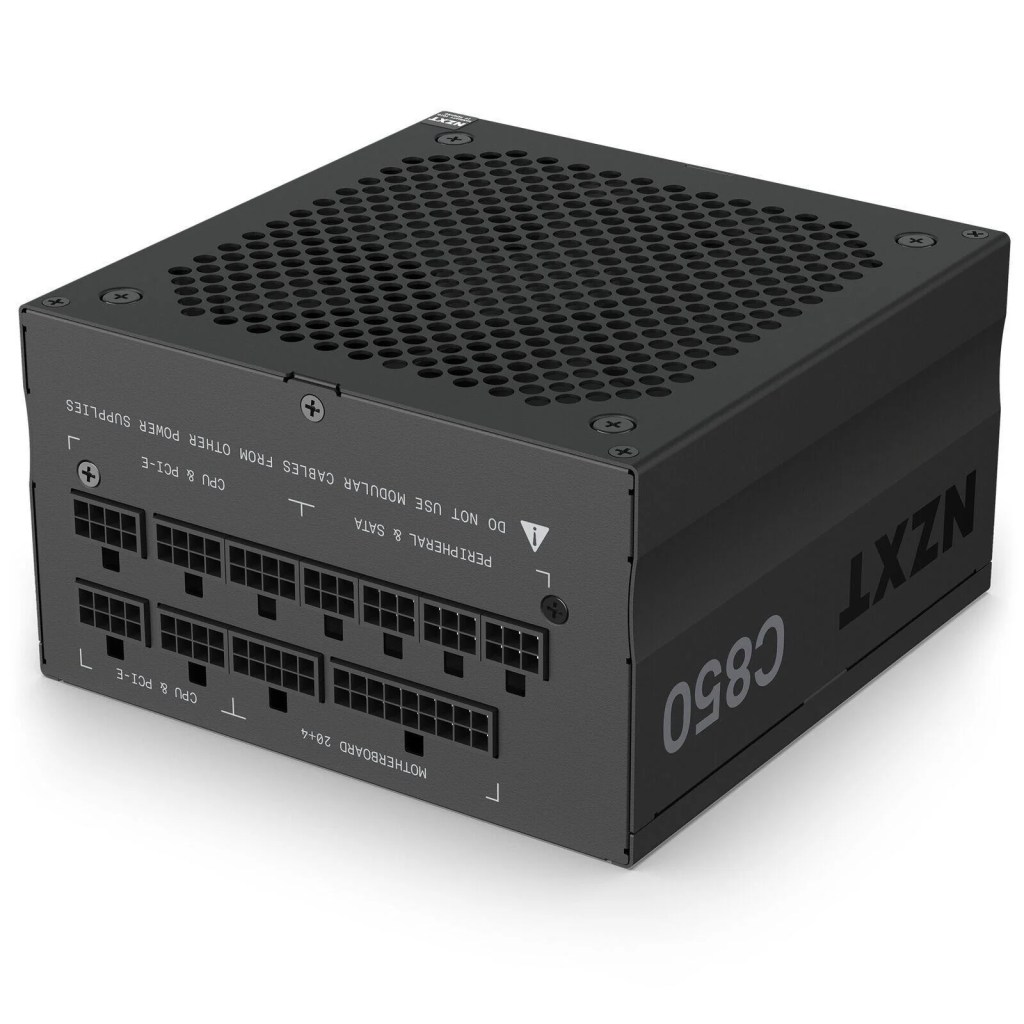
Fully modular power supplies: design, advantages, and limitations
A fully modular power supply design gives you total freedom in connecting the hardware you need, depending on your PC configuration. A modular PSU comes with separate cables you connect later and only those you need. This makes it easier to plan upgrades and install extra components as there’s less cable clutter, giving you more usable space inside the system. In other words, fewer cables mean cleaner airflow paths and reduced dust buildup inside the case.
Semi-modular power supplies: balancing flexibility and cost
Semi-modular power supplies are a golden middle between fully modular and non-modular PSUs. They come with limited cables soldered to the power unit (the core ones for system operation), and those that separate from it you connect as needed. Such a design approach reduces the number of unused cables inside the case, but usually makes this type of PSU more affordable than a fully modular model.
Semi-modular PSUs are a good fit for standard gaming setups, where the set of primary connections typically remains the same. At the same time, a fully modular PSU offers more flexibility when building, upgrading, and managing cables. In any case, it’s up to you what to choose, depending on your PC build type.
Non-modular power supplies: simplicity, affordability, and trade-offs
Non-modular PSUs have all cables soldered to the unit without the possibility to disconnect or replace them. Such PSUs cost less than fully modular ones, which is an attractive factor for budget gaming systems.
Their main trade-off is reduced flexibility. Unused cables have to be tucked inside the case, which can complicate cable management and somewhat limit the space available for airflow. However, it’s not the modularity of the power supply that determines its reliability and quality: it’s the ease of installation and cable management.
Cable management, airflow, and installation differences
PSU modularity is all about the convenience in cable management, the connection of the necessary hardware, and then their replacement. With a fully modular PSU, you choose on your own what to connect and freely manage the cable assembly inside the case. Semi-modular keeps the same principle while having soldered cables (the standard ones that need to be connected for PC operation). Non-modular PSUs come with lots of cables connected to the unit, so there is no way to choose what to connect and what to leave for later.
In terms of installation, modular models offer greater flexibility, especially in compact cases or when upgrading. At the same time, modularity alone does not determine a PSU’s performance or reliability. As we mentioned before, it primarily simplifies cable management and helps make more efficient use of the PC’s internal space.
Reliability, electrical performance, and upgrade potential
The PSU modularity doesn’t affect its reliability or set the rules for electrical characteristics. Component quality, voltage regulation, ripple, efficiency, and protection systems affect power supply stability the most. Therefore, both modular and non-modular power supplies can provide equally reliable operation provided they are well-designed.
At the same time, the fully modular PSU design provides more freedom when you decide to upgrade your build. You can replace or add the necessary cables to accommodate new components without having to reinstall the entire set.
Which power supply type should you choose for your PC
For most modern PCs, a fully modular PSU is the most practical option. It simplifies installation, cable management, and future upgrades by allowing you to use only the cables you need. A non-modular PSU is suitable for simple, budget-friendly systems that don’t require a large number of connections. A semi-modular PSU strikes a balance between price and convenience.
Before choosing between a modular PSU vs non modular PSU, consider also power output, efficiency, voltage stability, protective features, and compatibility with your components.
Conclusion
The modularity type of a PSU primarily determines ease of assembly, cable management, and future upgrade options. Non-modular models remain a practical choice for simple systems, while semi-modular and fully modular PSUs offer greater flexibility.

Axee Davies is the founder of AxeeTech, publishing gaming guides, codes, and Windows how-tos since March 2013. A tech enthusiast for 13+ years — starting with smartphones and Android rooting — he now runs a site that puts out a new guide every day for Roblox players, traders, and Windows users. More about AxeeTech
More How to You May Like
 Top 3 Free online MBOX to PST Converters
 Windows Resource Protection Could Not Start the Repair Service
 Night Light Not Working in Windows 11: 7 Easy Fixes
 Windows 11 Update Stuck at 46%: 7 Proven Fixes
 Start Menu Not Working in Windows 11: 7 Fixes That Work
 Repair Windows 10 From USB: 7 Step-by-Step Fixes
 BitLocker Waiting for Activation: 6 Fixes That Work
 Windows RE Image Was Not Found: 6 Fixes That Work [Repair Builder]